
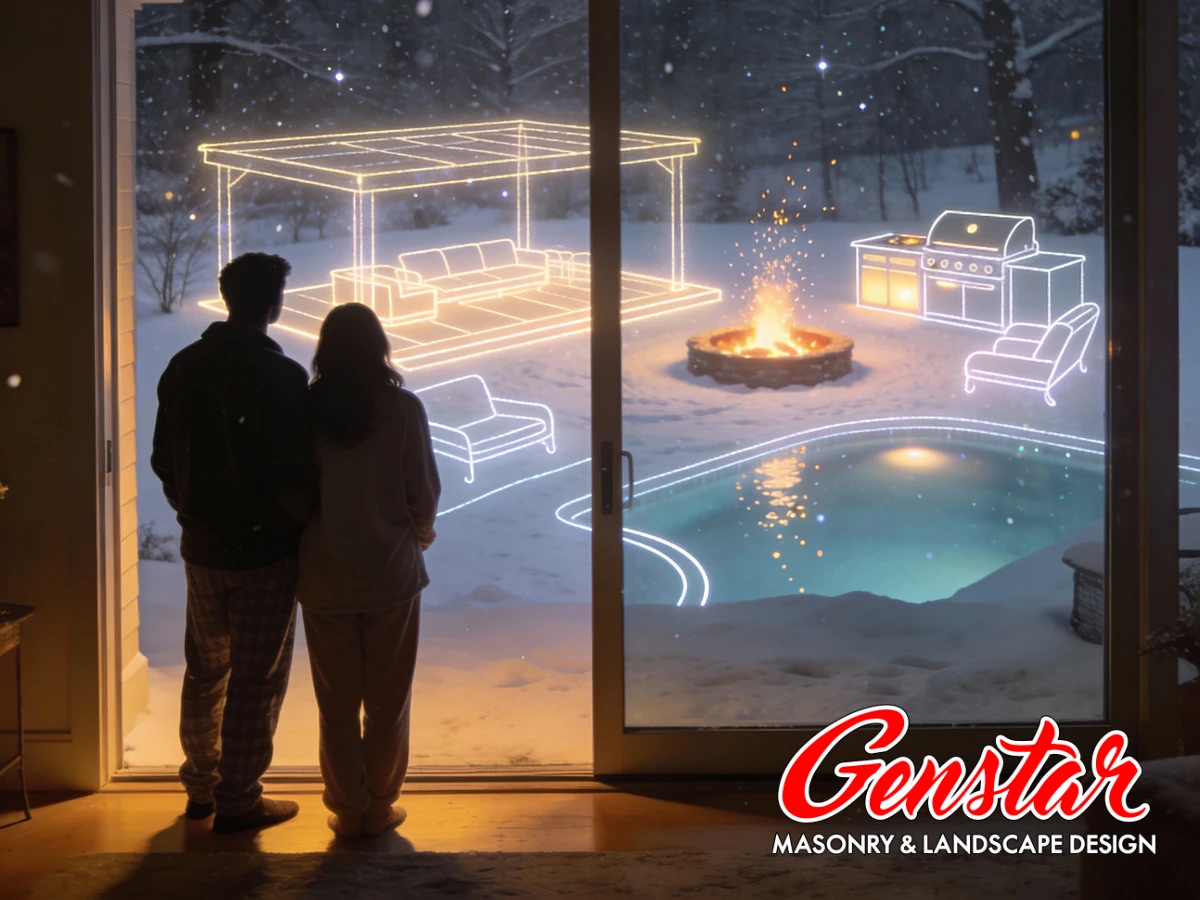
In Part 1 of this series, we talked about the hardest part of planning an outdoor space. Getting the idea out of your head and into the real world. Sketching something simple. Walking your yard. Laying out shapes and imagining how you want to use the space.
Once you’ve done that, something usually shifts.
The idea starts to feel real.
And that is when most homeowners pause and ask the same question.
“Can this actually be built?”
This is where hesitation often creeps in. You may like the idea you’ve created, but you are not sure what comes next. You may feel like you need more answers before calling anyone. Or you worry you should have everything figured out first.
You don’t.
But there are a few real-world considerations that help turn an idea into a plan.
Permits Are Easier When You Know Early
Not every project requires permits. Many patios do not. But once pools, structures, retaining walls, or changes in elevation come into play, permits can become part of the process.
Knowing this early helps with timing and expectations. It prevents last-minute surprises and makes scheduling much smoother.
Permits are not something to fear. They are simply easier to manage when they are part of the plan from the beginning.
Materials Take Planning Too
Some stone and pavers are readily available. Others are not.
Certain colors, textures, or specialty materials may need to be ordered, especially when demand increases in the spring. Planning early usually means more choices. Waiting can mean adjusting the design to what is on hand.
This is not about rushing decisions. It is about keeping your options open.
Every Yard Has Its Own Challenges
Two backyards can look similar and behave very differently once work begins.
Drainage, slope, access to the yard, and what is below the surface all matter. These details rarely show up in inspiration photos, but they play a big role in how a project is designed and built.
Good planning does not limit creativity. It supports it by making sure the space works as well as it looks.
A Quick Note About Budget
Budget is often the quiet concern homeowners carry from the start.
Some people worry about it before they even know what they want. Others avoid thinking about it until the very end. In reality, you do not need a final number to begin planning.
Having a general comfort range helps guide decisions. Size, materials, and features all affect cost, and early conversations help align the vision with realistic options.
We will talk more about budget and financing in the next post, including how homeowners approach larger projects and how people often spread costs out over time.
Planning Conversations Are Not Commitments
One of the most common misconceptions is that calling for a consultation means committing to a project.
It does not.
Early conversations are about understanding what is possible, what might take time, and what needs a little more thought. They help connect ideas to real-world details.
You can make changes. You can take time. You can decide when you are ready.
The goal is clarity, not pressure.
From Vision to Confidence
If you can picture the space, walk it in your yard, and understand a few practical considerations, you are already well ahead of the process.
At that point, planning feels less overwhelming and more exciting.
And when you are ready, the next step is simply a conversation to make sure your vision is realistic, well-timed, and set up for success.
Coming next: How to talk about budget and financing without killing the dream.